

Most volleyball players know they should warm up before playing.
The problem is that many warm-ups either become rushed, random, or consist entirely of a few quick stretches before stepping onto the court.
Modern sports science suggests that an effective warm-up should do much more than simply “stretch your muscles.” A proper warm-up prepares your body, nervous system, and movement patterns for the demands of volleyball.
Whether you’re playing recreationally once per week or competing regularly, understanding why we warm up can help you perform better, feel better after games, and potentially reduce your risk of injury.
What's the purpose of warming up?
A warm-up is designed to prepare your body for the specific physical demands that are about to occur.
Research suggests that effective warm-ups help:
- Increase muscle and tissue temperature
- Improve force production and power output
- Enhance coordination and reaction time
- Prepare joints and tissues for movement
- Improve movement efficiency
- Increase mental readiness and focus
In other words, a warm-up is not simply about becoming more flexible. It’s about preparing your body to move efficiently and tolerate the demands of the sport.
Why Volleyball Places Unique Demands on the Body.
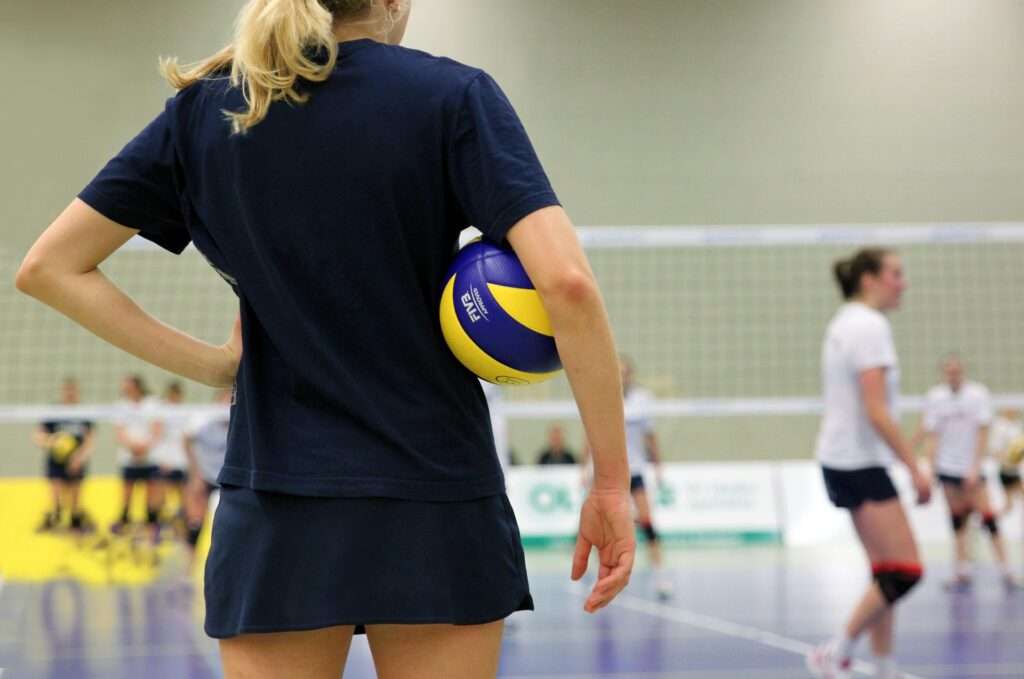
Volleyball is a sport that requires repeated:
- Jumping and landing
- Sprinting and accelerating
- Rapid changes of direction
- Overhead hitting and serving
- Rotational movements through the trunk
These actions place significant stress on several areas of the body, particularly:
- Shoulders
- Knees
- Ankles
- Hips
- Low back
Because of these demands, a volleyball warm-up should specifically prepare these regions rather than relying on generic stretching alone.
Dynamic Warm-Ups vs. Static Stretching

For many years, static stretching was considered the standard approach to warming up.
Examples include:
- Touching your toes and holding the position
- Holding a quad stretch for 30 seconds
- Holding a calf stretch against a wall
While static stretching can be useful in some situations, research suggests that long-duration static stretching immediately before explosive activities may temporarily reduce force production and power output.
Volleyball is an explosive sport.
As a result, dynamic movement tends to be a better primary warm-up strategy before playing.
Dynamic warm-ups involve controlled movement through ranges of motion rather than holding a stretch for extended periods.
Examples include:
- Leg swings
- Arm circles
- Walking lunges
- Lateral shuffles
- Thoracic rotations
- Skipping movements
Dynamic movements help prepare the body while maintaining or improving athletic performance.
This does not mean static stretching is “bad.” It simply means that timing matters.
Whole-Body Impact
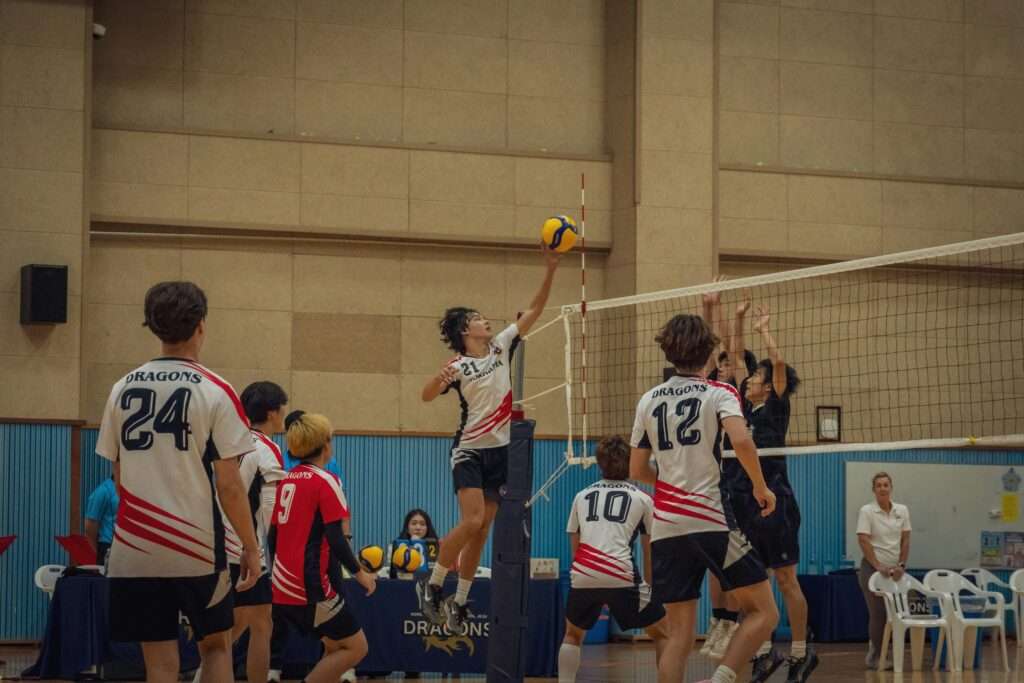
The most effective warm-ups tend to follow four key principles:
1. Increase Body Temperature
Before asking your body to jump, sprint, and hit repeatedly, it helps to gradually increase overall movement and circulation.
Examples:
- Light jogging
- Skipping
- Lateral shuffles
- Easy court movement
Goal:
2–5 minutes
2. Move Through Useful Ranges of Motion
Rather than forcing flexibility, focus on actively moving through ranges of motion you will use during volleyball.
Examples:
- Leg swings
- Walking lunges
- Hip openers
- Thoracic rotations
- Arm circles
Goal:
2–4 minutes
3. Prepare the Nervous System
Volleyball relies heavily on coordination, balance, timing, and rapid force production.
This phase helps “wake up” the system responsible for those qualities.
Examples:
- Band shoulder exercises
- Pogo hops
- Balance drills
- Controlled landing practice
- Low-level plyometrics
Goal:
2–4 minutes
4. Rehearse Volleyball Movements
The final phase should resemble the sport itself.
Examples:
- Approach footwork
- Controlled jumping
- Progressive hitting
- Passing drills
- Pepper
- Short acceleration drills
The closer the warm-up becomes to actual volleyball demands, the more prepared the body becomes for play.
Goal:
3–5 minutes
A Simple Volleyball Warm-Up Framework
Phase 1: General Movement (2–3 Minutes)
- Jogging
- Side shuffles
- Backward movement
- Skipping
Phase 2: Dynamic Mobility (3–4 Minutes)
- Leg swings
- Walking lunges
- World’s greatest stretch
- Thoracic rotations
- Arm circles


Phase 3: Activation & Landing Prep (2–3 Minutes)
- Band pull-aparts
- Pogo hops
- Controlled squat jumps
- Single-leg balance drills
Phase 4: Volleyball-Specific Movement (3–5 Minutes)
- Approach mechanics
- Controlled jumps
- Passing
- Pepper
- Progressive hitting
Total Time:
Approximately 10–15 minutes
Common Warm-Up Mistakes
Mistake #1: Skipping the Warm-Up Entirely
The fastest warm-up is often no warm-up at all, but it may leave your body unprepared for explosive activity.
Mistake #2: Only Stretching
Flexibility is only one component of preparation.
A good warm-up should also address movement, coordination, power, and sport-specific demands.
Mistake #3: Going Too Hard Too Soon
Warm-ups should be progressive.
The goal is to gradually prepare your body, not exhaust it before the game begins
Mistake #4: Doing the Same Warm-Up for Every Sport
Volleyball has unique demands.
A warm-up should reflect those demands whenever possible. So that means you shouldn’t be doing the same things for pickleball, running or weightlifting as volleyball.
The Bottom Line

The purpose of a warm-up is not simply to stretch.
An effective volleyball warm-up should gradually prepare your body for the demands of jumping, landing, hitting, sprinting, and changing direction.
Research consistently supports warm-ups that are:
- Dynamic
- Progressive
- Sport-specific
- Focused on movement preparation
You don’t need a complicated routine.
For most players, 10–15 minutes of structured preparation before play can go a long way toward improving readiness, performance, and recovery.
If you’re experiencing recurring shoulder tightness, knee soreness, ankle stiffness, or low back discomfort after volleyball, it may be worth investigating whether your warm-up, recovery habits, and movement capacity are matching the demands you’re placing on your body.

Richard Lam
Richard is the owner of Vital Wellness centre and practices as a registered massage therapist with a specialty in therapeutic massage, utilizing techniques including manual therapy, contemporary medical acupuncture and exercise therapy.