With temperatures climbing over the past few weeks, many people are spending more time outdoors—working, exercising, gardening, golfing, or simply enjoying the sunshine. While summer is a great time to stay active, it’s also when we see a rise in heat-related illnesses and muscle complaints.
One thing many people don’t realize is that the same dehydration and electrolyte losses that contribute to heat illness can also leave your muscles feeling tight, fatigued, and more prone to cramping.
Let’s take a look at how to recognize the warning signs and how to keep yourself performing at your best.
Table of Contents
Understanding Heat-related Illness
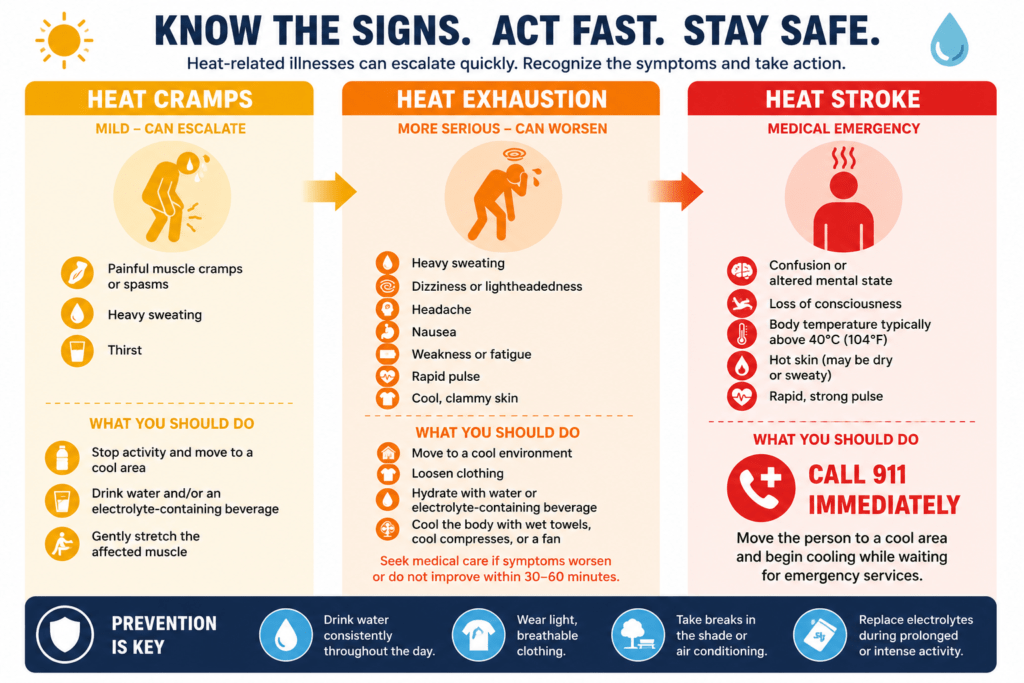
| Condition | Common Signs & Symptoms | What You Should Do |
|---|---|---|
| Heat Cramps | Painful muscle cramps or spasms (often in the calves, thighs, shoulders, or abdomen), heavy sweating, thirst | Stop activity, move to a cool area, drink water and/or an electrolyte-containing beverage, gently stretch the affected muscle. |
| Heat Exhaustion | Heavy sweating, dizziness, headache, nausea, weakness, rapid pulse, cool or clammy skin | Move to a cool environment, loosen clothing, hydrate, cool the body with wet towels or a fan. Seek medical care if symptoms worsen or don’t improve. |
| Heat Stroke (Medical Emergency) | Confusion, altered mental status, loss of consciousness, hot skin (may be dry or sweaty), body temperature typically above 40°C | Call 911 immediately. Begin cooling the person while waiting for emergency services. Heat stroke is life-threatening. |
The earlier you recognize these symptoms, the easier it is to prevent a more serious heat-related illness.
Why does Heat affect your Muscles?
Your muscles rely on adequate hydration and normal electrolyte levels to contract and relax efficiently.
When you sweat, your body loses:
- Water
- Sodium
- Potassium
- Chloride (and smaller amounts of other electrolytes)
If these losses aren’t replaced, particularly during prolonged activity, then muscles fatigue more quickly and become more susceptible to cramping.
You might notice:
- Tight calves after a long hike
- Hamstring cramps during sports
- Achy shoulders after working outside all day
- Increased stiffness after yard work or golfing
Many people assume they’ve simply “overworked” their muscles, when dehydration may also be contributing to how they feel
Water vs Electrolytes
Water is still your body’s most important source of hydration, and for most everyday activities, it’s all you need.
However, electrolyte replacement becomes more important if you are:
- Exercising for longer than about an hour
- Working outdoors in the heat
- Sweating heavily
- Participating in tournaments or endurance events
- Spending several consecutive hours outside
Replacing both fluids and electrolytes helps your body maintain normal muscle and nerve function, supports performance, and can reduce the risk of heat-related muscle cramps.
Where Does Massage Therapy Fit In?
Massage therapy is not a treatment for heat exhaustion or heat stroke. If you’re experiencing symptoms of heat illness, your priority should always be cooling down, rehydrating, and seeking medical attention when appropriate.
Once you’ve recovered, however, massage therapy can be an excellent part of your recovery from physically demanding summer activities.
Many patients come in after:
- Weekend tournaments
- Long cycling or running sessions
- Landscaping or construction work
- Golf outings
- Moving furniture
- Gardening marathons
Massage therapy may help reduce residual muscle tension, improve mobility, and ease the soreness that often follows long days of physical activity.
Tips for Staying Safe This Summer
 Drink water consistently throughout the day—not just when you’re thirsty.
If you’re sweating heavily for prolonged periods, consider replacing electrolytes as well as fluids.
Wear light, breathable clothing.
Take breaks in the shade or air conditioning during prolonged outdoor activity.
Don’t ignore early signs like dizziness, muscle cramping, or unusual fatigue.
If someone becomes confused, loses consciousness, or shows signs of heat stroke, call 911 immediately
Stay Safe and Enjoy the Summer
Summer should be spent enjoying the outdoors, not recovering from preventable heat illness. A little planning, proper hydration, and paying attention to your body’s warning signs can go a long way toward keeping you healthy, active, and feeling your best.
If you’re dealing with lingering muscle tightness or soreness after your summer activities, we’re always happy to help you get back to doing what you enjoy.

Richard Lam
Richard is the owner of Vital Wellness centre and practices as a registered massage therapist with a specialty in therapeutic massage, utilizing techniques including manual therapy, contemporary medical acupuncture and exercise therapy.
FAQ
What is the difference between heat cramps, heat exhaustion, and heat stroke?
Heat-related illnesses exist on a spectrum, ranging from mild muscle cramps to life-threatening heat stroke.
Heat cramps are often the earliest warning sign. They typically present as painful muscle cramps or spasms after prolonged sweating and physical activity.
Heat exhaustion is a more serious condition. Symptoms may include heavy sweating, dizziness, headache, nausea, weakness, rapid pulse, and cool, clammy skin. Without prompt cooling and hydration, heat exhaustion can progress to heat stroke.
Heat stroke is a medical emergency. Warning signs include confusion, altered mental status, loss of consciousness, hot skin (which may be dry or sweaty), and a body temperature typically above 40°C (104°F). If someone is showing signs of heat stroke, call 911 immediately and begin cooling them while waiting for emergency services.
Recognizing these conditions early can prevent a medical emergency.
Why do my muscles cramp more in hot weather?
Muscle cramps become more common during hot weather because your muscles are working under greater physiological stress.
When you sweat, your body loses both water and electrolytes, particularly sodium. At the same time, prolonged activity causes muscle fatigue. Together, these factors can disrupt normal muscle contraction and relaxation, increasing the likelihood of painful cramping.
Heat cramps commonly affect the calves, hamstrings, quadriceps, shoulders, forearms, and abdominal muscles, especially in people who work outdoors, play sports, garden, hike, or exercise in the heat.
The best way to reduce your risk is to stay hydrated, replace electrolytes when appropriate, pace yourself during prolonged activity, and gradually acclimatize to hot weather.
When do I need electrolytes instead of just water?
For most everyday activities, water is all you need.
Electrolyte replacement becomes more important when you’re sweating heavily for prolonged periods, such as during endurance exercise, outdoor work, sports tournaments, hiking, or spending several hours in hot conditions.
Electrolytes, including sodium, potassium, and chloride, will help regulate nerve signals, muscle contractions, and fluid balance. Replacing both fluids and electrolytes after prolonged sweating helps your body recover more effectively.
Most people do not need sports drinks for short walks, office work, or light daily activities.
What are the early signs of dehydration?
Dehydration often develops gradually, making it easy to overlook.
Early warning signs include:
- Increased thirst
- Dry mouth
- Dark yellow urine
- Headache
- Fatigue
- Dizziness
- Reduced exercise performance
- Muscle cramping
Addressing dehydration early by drinking fluids and taking breaks from the heat can help prevent more serious heat-related illnesses.
Why do I feel more sore after exercising or working in the heat?
Many people assume that soreness after outdoor activity is simply from working harder. While physical exertion certainly contributes, exercising in the heat places additional demands on your body.
Higher temperatures increase cardiovascular strain, accelerate fatigue, and lead to greater fluid loss through sweating. These factors can leave muscles feeling more tired, stiff, and sore following activity.
Proper hydration before, during, and after exercise, combined with adequate recovery, can help reduce post-activity soreness.
Can dehydration increase my risk of injury?
Yes. Although dehydration doesn’t directly cause injuries, it can contribute to conditions that increase injury risk.
When you’re dehydrated, you may experience fatigue, slower reaction times, decreased coordination, reduced endurance, and impaired concentration. Combined with muscle fatigue and cramping, these factors can increase the likelihood of strains, sprains, and other activity-related injuries.
Maintaining hydration is an important part of overall injury prevention, particularly during the summer months.
What should I do if I experience heat exhaustion?
If you think you’re experiencing heat exhaustion:
- Stop physical activity immediately.
- Move to a cool or shaded environment.
- Loosen or remove excess clothing.
- Drink cool water or an electrolyte-containing beverage if you’re able.
- Apply cool, wet towels or use a fan to help lower body temperature.
If symptoms worsen, don’t improve within a short period, or if you become confused or lose consciousness, seek emergency medical attention immediately.
Can I get a massage if I'm dehydrated or overheated?
It’s best to wait until you’ve recovered.
Massage therapy is not a treatment for heat exhaustion or heat stroke. If you’re actively experiencing dizziness, nausea, overheating, or signs of dehydration, your priority should be cooling down, rehydrating, and seeking medical care if necessary.
Once you’ve recovered and are feeling well again, massage therapy can help address the muscle tightness and soreness that often follow prolonged physical activity.
How can massage therapy help after working in the heat?
After a physically demanding day outdoors, many people experience muscle tightness, stiffness, and general soreness.
Once you’re properly hydrated and have recovered from the heat, massage therapy may help:
- Reduce muscle tension
- Improve joint mobility
- Decrease feelings of stiffness
- Promote relaxation
- Support recovery following physically demanding activities
Whether you’ve spent the day golfing, gardening, cycling, hiking, playing sports, or working outdoors, massage therapy can be a valuable part of your recovery plan.
How can I prevent heat-related illness this summer?
Most heat-related illnesses are preventable with a few simple habits.
To reduce your risk:
- Drink fluids consistently throughout the day.
- Replace electrolytes during prolonged periods of heavy sweating.
- Wear lightweight, breathable clothing.
- Schedule strenuous activities during cooler parts of the day when possible.
- Take regular breaks in the shade or air conditioning.
- Gradually acclimatize to hot weather over several days.
- Never ignore dizziness, excessive fatigue, or muscle cramps.